Greetings one and all. First and foremost, I am an automotive enthusiast of the higher order. Sports cars. Big, cushy luxury sedans. Heavy duty diesel crew cab full-size trucks with eight inches of lift and 38 inch tall mud tires. Chromed out SUVs scraping the ground. Pocket rocket econo-hatchbacks. Old school muscle cars. I love 'em all. I also subscribe to several enthusiast magazines and take part in discussions on several enthusiast websites. As a matter of fact, a story on one website (either Autoblog or Jalopnik) led me to a group of GM engineers and enthusiasts who have far superior Photoshop and HTML skills than I do. They created a comprehensive GM lineup for North America, and presented it in a website with links to all of the specific lineups. That was my inspiration for this, and I must give a tip of the cap to the people behind GM: Revitalization In Action.
And with all honesty, regardless of brand preferences, good cars have universal appeal to the car enthusiasts. You can be a die-hard Mopar fanatic and still completely appreciate (and revere) the idea of a Don Yenko-prepped Chevrolet Chevelle SS LS6. Likewise a Blue Oval Early Bronco fan can look at an early 70s Toyota FJ40 Land Cruiser with 4 inches of lift, lockers, a winch, 33 inch mud terrains, and a GM small block conversion, and be perfectly happy to go out rock climbing with it in the group. Even the snootiest of supercar fans can still acknowledge and respect the bang for the buck that has been wrought by the Mustang GT 500KR, the ZR1 Corvette, and the Viper SRT-10.
For the record, though, I am a Ford fan. The earliest Ford I remember being in my family was my father's 1969 Torino GT with a 390 V8. At one point when I was in high school, my family's vehicles were all Fords: Taurus Wagon for Mom, Ranger for Dad, and I had an Escort EXP. Even back then having a disdain for the mainstream GM products, I was still able to appreciate such vehicles as the IROC-Z28, the Buick Grand National GNX, and the Z71 full-size trucks. But I remained a Ford fan. I have had periods where I haven't had a Ford, but I still rank them high on my "consideration" chart. Currently the Edge is one of the leading candidates for when my current lease is up.
After the success that Ford had in the 80s, the 90s saw some drifting. The Explorer was introduced and was a smash hit. But as a contrast, the Taurus went far too long without a proper redesign, and the 1996 redesign was not worthy of the Taurus name, in my humble opinion. That design languished long enough as to bleed the equity out of the nameplate. Powertrain combinations failed to keep up with, much less surpass what was coming out of both GM and the imports in terms of both mileage and power. Refinement and quality suffered during those periods as well, and sales declined as people jumped ships to the juggernauts of Toyota and Honda.
Ford has initiated several programs to turn things around...Bold, The Way Forward, etc. There has been some positive action on these fronts...the return of the Taurus and Sable nameplates, the Fusion, the continued sales leadership of the F-Series trucks. But as I see it, there are still many concerns. The powertrains offered in the F-Series seem to be lacking in both mileage and power ratings compared to their contemporaries; the interior on the Mustang is horrendous; the 2008 North American Focus is horrifically unattractive; the lack of new and distinct product for Mercury is a shame; the interiors offered on current Lincolns, particularly the Navigator (which is also sorely underpowered compared to its competitors like the Escalade and GL450) goes so far in the retro style of the instrument panel as to be unattractive.
What I have attempted to do with this website is to create a comprehensive lineup for Ford Motor Company's three North American divisions, Ford, Mercury, and Lincoln. I have established basic styling themes and characteristics for each division, identified vehicle platforms for the individual vehicles, and established powertrain options. I have attempted to identify and/or utilize platforms, vehicles, and technology and powertrains that are currently available or proposed within the FoMoCo family. Where specific vehicles/platforms/powertrains do not exist, I have made my best possible suggestions based on what either is available, or seems reasonably feasible to create. I am neither an engineer nor am I a stylist, so I can offer no guarantee as to the feasibility of the vehicles and components I have proposed. That being said, I feel that the specifications I identify are not unreasonable given current offerings and announced technology. These vehicles, platforms, and powertrains are geared for the North American market, but could serve as the basis for global offerings. Some technology and componentry is sourced from other divisions of Ford Motor Company, but the vehicles ultimately described herein are strictly Ford, Mercury, and Lincoln.
All of that being said, Here's How I Would Do It. Platforms are discussed here. Powertrains are discussed here. The comprehensive lineup of Ford cars and trucks is discussed here. The proposed revitalization of Mercury is here. And the reestablishment of Lincoln as a true, top tier luxury brand is discussed here.
Should you have any comments, please feel free to comment on the specific posts. Or if you wish a more personal form of communication, I can be reached via email at: iamhoff@gmail.com.
Showing posts with label platforms. Show all posts
Showing posts with label platforms. Show all posts
Monday, May 19, 2008


Wednesday, March 26, 2008
Update, strategy, and a no-no for Lincoln
I am still working on my vehicle lineup posts. March has just been an unfortunately hella busy month. First will come the Ford lineup, followed shortly by Mercury, and then Lincoln. As a preview, here's how I see each brand fitting into the USDM landscape:
Ford
The brand is the volume lineup with the broadest reach within the FoMoCo family. Everything from entry-level economy subcompacts to full-size sedans with luxury pretensions to legitimate sports cars to large trucks and SUVs. Styling would be a hybrid of the current "Bold" flavor and the European "kinetic" design language, with a version of the current grille evolved into more of a narrow billet-style, like this one.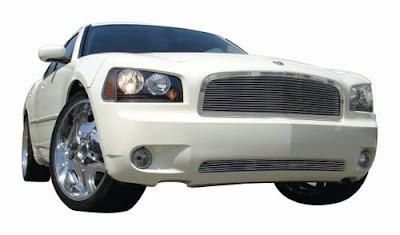 While there will be some specific comparisons among specific vehicles, generally Ford would be positioned against Chevrolet, Dodge, Honda, Jeep, Nissan, Toyota, and other mainstream brands.
Mercury
Mercury is being positioned as a combination entry-lux brand and a European competitor. The lineup is obviously not as comprehensive as that of Ford, but it does cover the high volume market segments with vehicles that aspire towards the higher-end of the segment, with sportier, European pretensions. Styling would mainly incorporate the "Kinetic" design language, with waterfall grilles, HID headlights, LED taillights, and other minor tweaks to fit the USDM. As with Ford, certain vehicles would be targeted at specific competitors, but generally the brand would be positioned against Saturn, Volkswagen, Saab, Acura, Buick, Chrysler, and other near-luxury brands.
Lincoln
Lincoln is the moon-shot brand, the aspirational brand that will be aimed at the best in the world. Styling would incorporate the current design language of the split grille with a chiseled, look more consistent with the current "Bold" design language. Luxury cues would obviously abound, including HID/LED headlights, thin, wide LED taillight clusters, etc. Lincoln would be aimed at the best brands, including Audi, BMW, Cadillac, Infiniti, Jaguar, Lexus, Mercedes, etc. As with Cadillac, it is expected that pricing against competing vehicles would be likely 10 to 15 percent lower, due to the ability to amortize platform and powertrain costs across several vehicle lineups.
In any respect, the lineup posts should be coming soon. One Lincoln vehicle that will have no place in my lineup is this: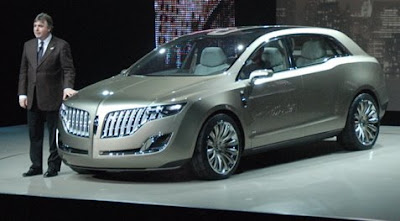
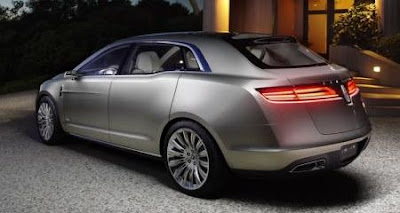 Lincoln is envisioning the MKT, which would be based on the Ford Flex (which is another vehicle I want no part of) as their competitor to Buick's Enclave. I have two issues with this. First, the MKX is already in place for this...and to enlarge it to add a third row would help to differentiate it from the Edge. Besides, with its new Limited package, the Edge treads very closely to the current MKX. But more importantly, THIS THING IS FREAKING UGLY!! Pontiac Aztek ugly!! This vehicle has no future in my world, and even if Ford did move forward with it, there's no way it's going to sell in any quantity, with looks like these!
Posts coming soon!
Ford
The brand is the volume lineup with the broadest reach within the FoMoCo family. Everything from entry-level economy subcompacts to full-size sedans with luxury pretensions to legitimate sports cars to large trucks and SUVs. Styling would be a hybrid of the current "Bold" flavor and the European "kinetic" design language, with a version of the current grille evolved into more of a narrow billet-style, like this one.
 While there will be some specific comparisons among specific vehicles, generally Ford would be positioned against Chevrolet, Dodge, Honda, Jeep, Nissan, Toyota, and other mainstream brands.
Mercury
Mercury is being positioned as a combination entry-lux brand and a European competitor. The lineup is obviously not as comprehensive as that of Ford, but it does cover the high volume market segments with vehicles that aspire towards the higher-end of the segment, with sportier, European pretensions. Styling would mainly incorporate the "Kinetic" design language, with waterfall grilles, HID headlights, LED taillights, and other minor tweaks to fit the USDM. As with Ford, certain vehicles would be targeted at specific competitors, but generally the brand would be positioned against Saturn, Volkswagen, Saab, Acura, Buick, Chrysler, and other near-luxury brands.
Lincoln
Lincoln is the moon-shot brand, the aspirational brand that will be aimed at the best in the world. Styling would incorporate the current design language of the split grille with a chiseled, look more consistent with the current "Bold" design language. Luxury cues would obviously abound, including HID/LED headlights, thin, wide LED taillight clusters, etc. Lincoln would be aimed at the best brands, including Audi, BMW, Cadillac, Infiniti, Jaguar, Lexus, Mercedes, etc. As with Cadillac, it is expected that pricing against competing vehicles would be likely 10 to 15 percent lower, due to the ability to amortize platform and powertrain costs across several vehicle lineups.
In any respect, the lineup posts should be coming soon. One Lincoln vehicle that will have no place in my lineup is this:

 Lincoln is envisioning the MKT, which would be based on the Ford Flex (which is another vehicle I want no part of) as their competitor to Buick's Enclave. I have two issues with this. First, the MKX is already in place for this...and to enlarge it to add a third row would help to differentiate it from the Edge. Besides, with its new Limited package, the Edge treads very closely to the current MKX. But more importantly, THIS THING IS FREAKING UGLY!! Pontiac Aztek ugly!! This vehicle has no future in my world, and even if Ford did move forward with it, there's no way it's going to sell in any quantity, with looks like these!
Posts coming soon!
Wednesday, February 13, 2008
Vehicle Platforms
PLATFORMS
As mentioned in previous posts, I intend to cover the vehicle platforms first. Discussion of the platforms and the various vehicles that would utilize them will include a generic mention of powertrain configurations, but not specifics. Powertrains will be a separate post at some time in the near future, and will then be followed by the vehicle line posts.
Platforms would either be based on existing platforms within the FoMoCo empire (including Mazda and Volvo), evolutions of same, or reasonably likely replacements for the current class of platform. Again, I am not nor do I claim to be an engineer. Nor am I a bean counter. The feasibility of these platforms from both a technical as well as a financial perspective has not been determined. I am simply working off of my basic understanding of cars, the current state of the market, the current state of Ford's vehicle lineups throughout the world, and what future prognosticating has already been done. That being said, here we go.
Small FWD/AWD platform
This platform would underpin the majority of small cars and crossover utility vehicles within several of Ford's brands. Given this range, the modular platform would be able to accommodate vehicle lengths from approximately 165 to 182 inches. Powertrains would consist of 4cyl and hybrid 4cyl motors, and possibly 6cyl motors. Transmissions include 6m and 6a on the 4cyl cars, CVT for the hybrids, and 6m and 6a for the 6cyl cars. Suspension configurations would either be MacPherson Strut or Double Wishbone on the front, and 5 link rear.
Intermediate FWD/AWD platform
This platform would underpin the majority of mid-size cars and crossover utility vehicles within several of Ford's brands. Given this range, the modular platform, which is effectively an evolution of the aforementioned Small FWD/AWD platform, would be able to accommodate vehicle lengths from approximately 185 to 195 inches. Powertrains would consist of 4cyl and 6cyl motors, and hybrid 4cyl and possibly hybrid 6cyl motors. Transmissions include 6m and 6a on the 4cyl cars, CVT for the hybrids, and 6m and 6a for the 6cyl cars. Suspension configurations would either be MacPherson Strut or Double Wishbone on the front, and 5 link rear.
Intermediate/Large RWD/AWD platform
To me, this is the platform where the fun begins. Rear wheel drive with optional AWD, underpinning a variety of mid-size and large sedans, coupes, and CUVs. In the interest of further amortization of costs, the Mustang would also be built on this platform. The vehicles on this platform could range from lengths of approximately 186 to 206 inches. Powertrains would consist primarily of 6cyl and 8cyl gasoline motors, with possible application of the EcoBoost turbo 4cyl, hybrid gasoline 6cyls, and 6cyl turbo diesels. Transmissions include 6m (certain vehicles) and 6a for the majority of cars, with some luxury or performance models including a future 8 speed automatic. Suspension would be MacPherson Strut front and 5 link rear.
Light Duty Truck RWD/4WD platform
This is an obvious application. I envision this platform being utilized in a fashion similar to that of Nissan's F-Alpha truck platform. This platform would not only underpin the full-size pickup trucks and SUVs, but also a mid-size pickup to replace the Ranger and a true compact to mid-size SUV. The plaform would have a fully boxed frame, and would support an A-Arm independent front suspension and either a solid rear axle located with coils or a multi-link independent rear axle. Powertrains would consist of 4cyl, 6cyl and 8cyl gasoline motors, and 6cyl turbo diesels. Transmissions include 6m (certain applications) and 6a for all vehicles.
Heavy Duty Truck RWD/4WD platformThis is an even more obvious application, with vehicles including full-size trucks, vans, and utility/cutaway fitments/chassis cabs. There would be a fully boxed frame, with a coil-sprung independent front suspension on lighter-duty applications and a solid front axle with leaf springs for heavier duty applications. Rear suspension would consist of solid rear axles located with leaf springs. Powertrains would consist of 8cyl gasoline and 8cyl turbo diesel motors. Transmissions include 6m (certain applications) and 6a for all vehicles.
So now we have the platforms established, and we've alluded to the vehicles that would populate the Ford, Mercury, and Lincoln lineups in North America (and possible export markets). Stay tuned for the powertrain post.
Wednesday, January 9, 2008
And Ford Does Something Right
Well dear readers (are there any of you?), a change in my work schedule and the holidays have conspired to keep me from updating things here at How I Would Do It. And wouldn't you know, after a lot of thought, study, and tweaking (of data, not myself), Ford went ahead and made two press announcements that will cause me to further revise my upcoming posts on vehicles, platforms, and powertrains.
Powertrains - Ford has finally decided to offer some leading edge powertrain technology. Yes, when the Modular V8 family came out, it offered a then current configuration...aluminum block, SOHC, etc. Likewise the Duratec V6 family, originally from the 96 and on Taurus/Sable and the Zetec 4cyl family from the Focus/Contour/Fusion vehicles. All were then-current technology, but didn't really raise the bar or anything. But Ford is now jumping onto the leading edge of engine technology. EcoBoost. Ford's code language for Direct Injection and turbocharging. Articles in Jalopnik, Autoblog, and others have heralded Ford's presentation of this leading edge technology. Yes, other manufacturers have very recently introduced DI motors (Cadillac 3.6 V6 offered in the CTS and STS) and Turbo DI motors (Audi TFSi engines offered in the A3, A4, and (I believe in Europe) A6 lines). But this is leading edge, and Ford has placed themselves right there with DI and twin turbocharging. Initial figures offered for the two initial applications are a 4cylinder putting out 240 hp, and a 3.5l V6 (based on the current 3.5l Duratec offered in the Edge, Taurus, Sable, etc.) that puts out a very healthy 340 hp. Ford has also announced a version of this motor will be the top engine offered in the Lincoln MKS sedan, and it will pump out an estimated 415 hp.
Platforms - a breaking post from Autoblog (and likely other sources) has confirmed that Ford is working on a new RWD platform. With the aforementioned EcoBoost engine technology, achieving reasonable CAFE numbers is a greater possibility and allow further consideration of larger RWD vehicles that otherwise would've required V8 power. Details have not been provided, but this actually fits into the scheme I've been working on. Expect further details to arrive in the near future.
Vehicles - Ford is sort of throwing a monkey wrench into my well-laid plans. A few days ago, Autoblog, and other outlets have all reported on the Ford Explorer America concept. This is a complete rethink of the Explorer, to reflect the popularity of crossover SUVs. It also features the EcoBoost powertrains mentioned earlier. I say "sort of" because I am proposing a vehicle of this nature, but probably not on the same platform identified by Ford.
With all of this news hitting the ground, I've got to get things together and get my powertrain, platform, and vehicle lineup posts together. Then I've got to get someone at Ford to read it, and hopefully find some inspiration. Wish me luck.
Tuesday, December 11, 2007
How I Am Going To Do It
So. Quite the task I've laid out for myself. Design a full product range for 3 divisions of a major US auto manufacturer. All while attempting to employ or hold on to a sense of reality, by which I mean attempting to make use of technology, components, and even entire vehicles that exist currently within the corporate toy box. I'm not saying that these aren't going to be budget busters (nobody could implement all of these vehicles all at once, retooling nearly every factory at the same time) or push the bounds of practicality, but based on what Ford Motor Company is currently producing, the vehicles I will present are theoretically possible to produce.
The way that I will organize this experiment is as follows:
1. I will prepare a post that outlines the basic vehicle platforms that would be utilized throughout the lineups. I'm no engineer, so I'm not saying that the platforms I describe (assuming they currently exist) could accommodate what I'm proposing. I'm just laying out a general description of where I think the company should go and how they could possibly get there. So the Platform Post will describe the various vehicle platforms, establish what size vehicles the respective platforms could support, and what powertrains the platforms could accommodate.
2. I will prepare a post that outlines the various engine and powertrain options that would be utilized throughout the lineups. Some engines are existing, some are likely variations on existing engines, and some are completely new engines. Horsepower ratings are based on real world examples of similar engines/powertrains throughout the entire industry. I'm attempting to be realistic and not guarantee that if Nissan's 3.5L V6 makes 305 hp then the Ford 3.5L V6 will make 310 hp. When the engines are tuned and tweaked, the hp figures will rise and fall to fit what is expected. But for now, my estimates are I believe to be realistic estimations. Also regarding engine displacement, again I'm not an engineer, so whether it's feasible to have a 4cyl engine block support displacements from 1.5L to 2.5L, I don't know. I do know that historically engine blocks can support a wide range of displacements, assuming they are sized to accommodate modifications to the basic bore and stroke figures. Witness the historic small block Chevy. The original displacement for this motor was 283 cubic inches. The engine block was sized in such a way that, maintaining the original bore spacing, displacements could range up to 400 cubic inches. In fact, the most popular recent such modification (still a popular one among hot rodders and off-roaders) is to take a basic 350 cubic inch engine (of which GM made billions of), increase the bore of the cylinder and piston by .030 inches, and the displacement rises 33 cubic inches (or approximately 0.5L) to the popular 383 c.i. displacement. So again, what I'm proposing is theoretically possible.
3. Once the platforms and powertrains are established, then I will do a post to lay out the vehicles, division by division and maybe even platform by platform (the Ford division obviously will have the greatest number of vehicles and may require multiple posts to lay out the lineup). Where possible, I will include pictures that are either of current vehicles (like the Aussie Ford Falcon or European Ford Focus), or photochop renderings of what I'm envisioning. Estimated basic vehicle dimensions or size comparisons will be provided, along with a list of potential competitors.
So there you have it. How I will do, "How I Would Do It." Hopefully the right people will find some inspiration out there.
Subscribe to:
Posts (Atom)
